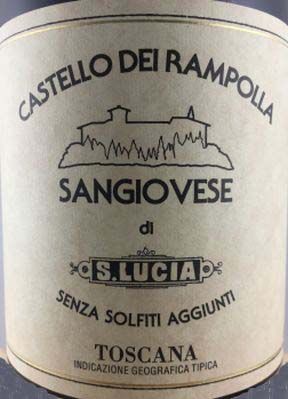
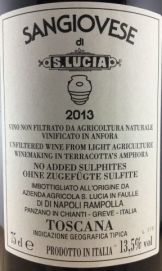
Discover a delightful expression of Sangiovese from CASTELLO DEI RAMPOLLA, an intriguing grape variety that forms the backbone of classic Tuscan wines like Chianti and Brunello di Montalcino. While we don't have specific details about this particular bottling's origin or classification, expect a wine with notes of dark cherry and subtle earthiness, typical of Sangiovese from its native Tuscan terroir. Whether enjoyed on its own or paired with hearty Italian dishes, it promises to be an engaging experience for those who appreciate the rich flavors of this versatile grape variety.

| TTB ID | 17151001000309 |
|---|---|
| Brand name | CASTELLO DEI RAMPOLLA |
| Fanciful name | S. LUCIA |
| Class / type | — |
| Origin / appellation | — |
| Grape varietals | SANGIOVESE |
| Approval date | Jun 27, 2017 |
| Status | APPROVED |
| Serial number | 170232 |
| Permit number | CA-I-3734 |
| Producer name & address | VIEUX VINS, INC. 280 VALLEY DR BRISBANE CA 94005 THE RARE WINE CO. (Used on label) |
| TTB record | View on TTB COLA Online → |
TTB remains the source of record. Wine Grabber links each record back to the public COLA detail when available.
View official TTB record →What would you like to do next?
Wine Grabber is a free public registry. Pick the path that fits you — your choice helps us learn what people come here for.