Botani's Muscat sparkling wine offers a delightful aromatic journey through the Mediterranean family of grapes known for its orange blossom and grape-like perfume, making it an inviting choice for those who appreciate both dry and sweet styles. With origins in Spain, this family of wines can be found across various regions around the world, from France to California, each with its unique character and food pairings that highlight the grape's aromatic complexity. Whether you prefer a crisp and fragrant dry Muscat or a delicate sweetness that pairs beautifully with fruit desserts and pastries, Botani’s Muscat is sure to captivate your palate.
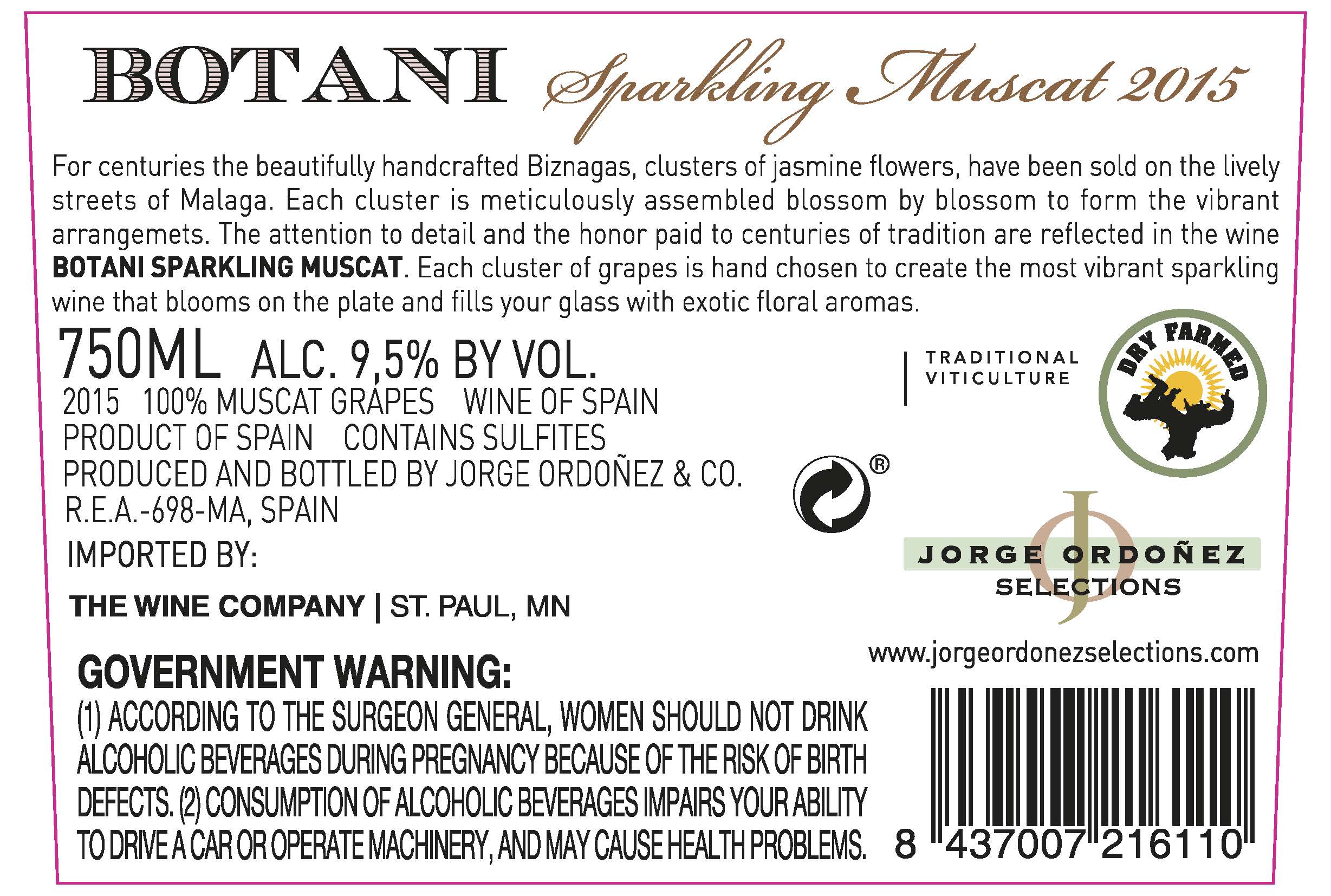
| TTB ID | 17254001000135 |
|---|---|
| Brand name | BOTANI |
| Class / type | — |
| Origin / appellation | — |
| Grape varietals | MUSCAT |
| Approval date | Sep 12, 2017 |
| Status | APPROVED |
| Serial number | 170910 |
| Permit number | MN-I-369 |
| Producer name & address | THE WINE COMPANY 425 W MINNEHAHA AVE SAINT PAUL MN 55103 |
| TTB record | View on TTB COLA Online → |
TTB remains the source of record. Wine Grabber links each record back to the public COLA detail when available.
View official TTB record →What would you like to do next?
Wine Grabber is a free public registry. Pick the path that fits you — your choice helps us learn what people come here for.