High confidence
Exact registry match — this is a specific TTB COLA record. We found a strong match for this wine.
What to Expect
This DOMAINE CAUHAPÉ wine is a delightful blend of Gros Manseng, Petit Manseng, Camaralet, Courbu, and Lauzet grapes, all carefully cultivated in southwest France. With its rich history in Jurançon and other appellations like Pacherenc du Vic-Bilh, this dessert/Port/Sherry/Cooking wine showcases the grape's vivid acidity, tropical fruit flavors, and sweet-wine potential. Its unique combination of high sugar and striking acidity makes it a versatile choice for both savory dishes and decadent desserts.
Original editorial summary © 2026 Encyclopedia of Wine. All rights reserved; may not be reproduced without permission. Registry facts are public TTB data; brand names and label artwork remain the property of their respective producers.
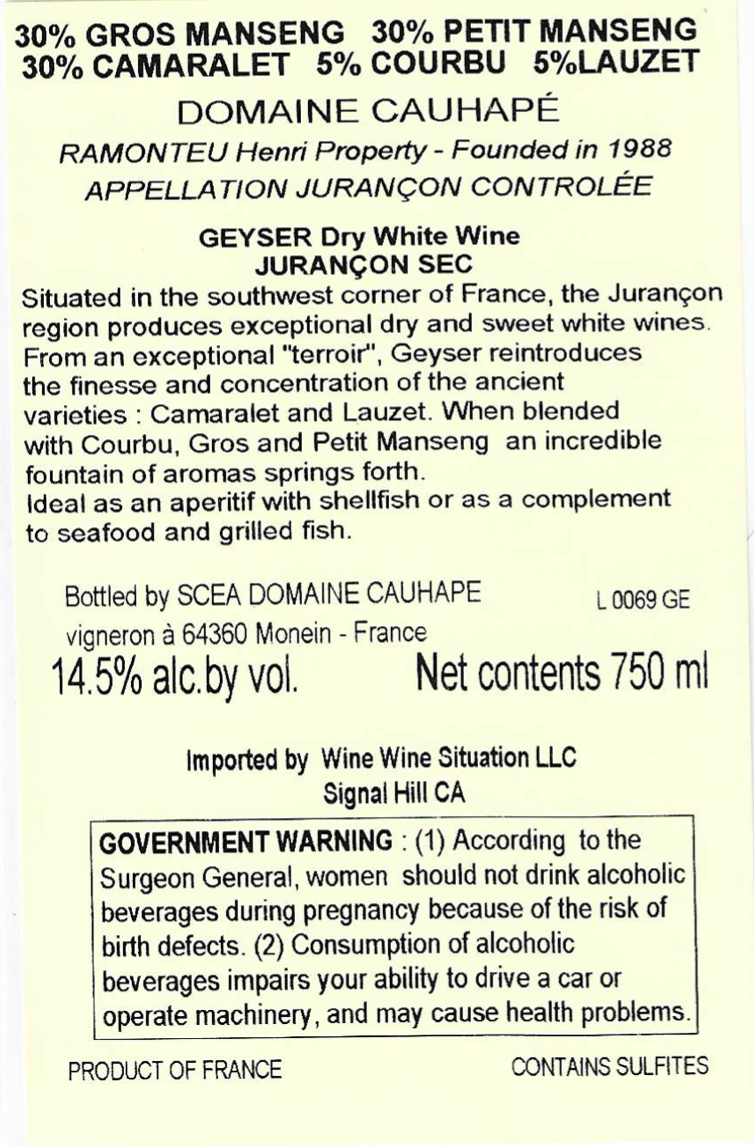
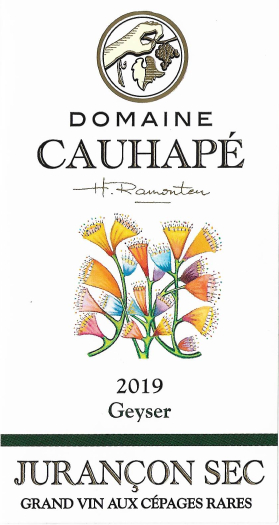
| TTB ID | 21112001000618 |
|---|---|
| Brand name | DOMAINE CAUHAPÉ |
| Fanciful name | GEYSER |
| Class / type | — |
| Origin / appellation | — |
| Grape varietals | Gros Manseng, Petit Manseng, Camaralet, Courbu, Lauzet |
| Approval date | Apr 26, 2021 |
| Status | APPROVED |
| Serial number | 210040 |
| Permit number | CA-I-15732 |
| Producer name & address | WINE WINE SITUATION, WINE WINE SITUATION LLC 2896 ORANGE AVE STE 220 Signal Hill CA 90755 |
| TTB record | View on TTB COLA Online → |
Official Source
TTB remains the source of record. Wine Grabber links each record back to the public COLA detail when available.
View official TTB record → Related Registry Pages
What would you like to do next?
Wine Grabber is a free public registry. Pick the path that fits you — your choice helps us learn what people come here for.
For wine drinkers
Understand & remember this wine
Scan, understand, save, and learn about this wine.
For wine businesses
Manage & monetize this wine data
Turn labels into clean product records, menus, shelf cards, ecommerce copy, and inventory-ready wine data.
Data sourced from the public TTB COLA Online registry. Wine Grabber is not affiliated with or endorsed by TTB.
Label images are being added for a growing share of records as we harvest them from TTB. Coverage is partial and growing. Coverage & Limitations →