Pietro Beconcini offers a blend of Trebbiano and Malvasia grapes with origins unknown but likely rooted in Italy's central and northern regions. This wine, known for its crisp and neutral character, is part of a broader family of Italian white grapes that includes Trebbiano Toscano. Like many Trebbiano wines, it can be found in simple dry whites or blends, showcasing the grape’s versatility and reliability. Expect flavors of lemon, green apple, pear, and subtle almond notes with a clean finish, ideal for pairing with light dishes like seafood, salads, and pasta.
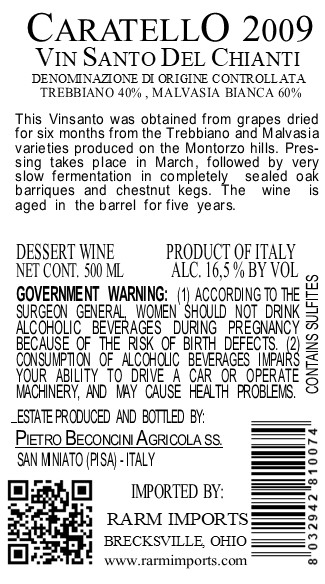
| TTB ID | 22045001000223 |
|---|---|
| Brand name | PIETRO BECONCINI |
| Fanciful name | CARATELLO |
| Class / type | — |
| Origin / appellation | — |
| Grape varietals | Trebbiano and Malvasia |
| Approval date | Feb 23, 2022 |
| Status | APPROVED |
| Serial number | 221116 |
| Permit number | OH-I-21065 |
| Producer name & address | RARM IMPORTS LLC 10117 BRECKSVILLE RD UNIT F27 Brecksville OH 44141 |
| TTB record | View on TTB COLA Online → |
TTB remains the source of record. Wine Grabber links each record back to the public COLA detail when available.
View official TTB record →What would you like to do next?
Wine Grabber is a free public registry. Pick the path that fits you — your choice helps us learn what people come here for.